

NiCd batteries are practical when a backup system must survive heat, vibration, frequent outages, difficult access, or a long service life, but their higher purchase cost and cadmium controls change the business case. By comparing chemistries, sizing the battery correctly, checking charging and installation requirements, and reviewing end-of-life obligations, you can decide whether NiCd fits your site rather than treating it as a drop-in alternative to lead-acid or lithium-ion.
Key takeaways
- Choose NiCd for harsh temperatures, vibration, deep discharge, or difficult maintenance access.
- Size the battery from actual discharge current, duration, temperature, and end voltage.
- Match charger settings, ventilation, battery-room controls, and emergency procedures.
- Compare suppliers on commissioning, testing, spares, recycling, and lifecycle support.
When NiCd earns its higher cost
A nicad battery industrial backup earns its higher purchase price when a failed battery is more expensive than years of extra capital cost. Choose it for remote or high-consequence sites where the battery room sees freezing conditions, sustained heat, vibration, difficult maintenance access, or repeated deep discharge.
NiCd retains more usable low-temperature capacity than lead-acid and tolerates overcharge and temperature stress better, but obtain temperature-specific capacity, life and charging data.
| Option | NiCd is usually the better choice when | Another chemistry is usually better when |
|---|---|---|
| VRLA | Ambient temperature varies widely, outages are severe, or battery replacement access is difficult | The room is climate-controlled and the duty is short standby with predictable maintenance |
| Flooded lead-acid | You need sealed, lower-maintenance operation and stronger tolerance of deep discharge and high heat | Lowest initial cost, ventilation and watering labour are acceptable |
| Lithium-ion | The site needs long life across harsh conditions and has limited fire-control or battery-monitoring capability | Low weight, compact footprint, high round-trip efficiency and controlled temperature justify the protection system |
| Nickel-metal hydride | Stationary industrial service demands established cell standards, long design life and supplier support | The application is portable equipment or a consumer-scale pack rather than fixed backup |
NiCd still carries alkaline-electrolyte, cadmium-handling and specialised recycling obligations. It also is not a VRLA drop-in replacement: a 132 Vdc nominal battery uses 110 cells at 1.2 V each, while charger settings, protection thresholds and end voltage must match the NiCd design.
Specify IEC 60623 cells, IEC 62485-2 installation safety, acceptance testing and lifecycle disposal before comparing prices.
Match the chemistry to the backup duty
A five-minute UPS ride-through and an eight-hour DC control load demand different NiCd choices. A NiCd battery industrial backup design must match electrode construction, discharge current, end voltage and autonomy; ampere-hours alone can undersize it.
| Duty | Suitable cell emphasis | What happens in service |
|---|---|---|
| Short, high-rate UPS discharge | Low-resistance high-power cells, including sintered or fibre-structured designs | Delivers heavy current with limited voltage sag, but the UPS must use the manufacturer’s high-rate discharge table and specified end voltage. |
| Medium-duration backup | A balance between power capability and capacity | Supports the inverter without treating its nominal ampere-hour rating as available at every discharge rate. |
| Long industrial DC backup | High-capacity pocket-plate cells | Provides durable standby energy and strong mechanical resilience, but requires more physical capacity for the same current over several hours. |
High-rate cells can make a NiCd string compact and responsive during a short UPS event. Their advantage narrows when autonomy extends: sustained current, temperature and the permitted final cell voltage determine how much capacity remains usable.
Pocket-plate construction suits long-duration station batteries because its robust plates tolerate repeated service and industrial conditions. Sintered designs favour rapid discharge, but their compact power advantage does not remove the need to check cycle life, maintenance requirements and the supplier’s discharge curves.
For either duty, calculate the string against the complete profile: DC load, UPS efficiency, power factor, duration, minimum permissible voltage, ambient temperature and ageing margin. Confirm cell count and protection settings with the charger and UPS manufacturer; a VRLA replacement profile can produce incorrect charging or premature low-voltage shutdown.
Size the battery from the discharge profile
A 10 kW load at 0.90 power factor and 90% UPS efficiency requires about 12.35 kW from the battery: 10 ÷ 0.90 ÷ 0.90. At a 110 V minimum battery voltage, that is 112 A. For 30 minutes, the ideal requirement is 56 Ah, but that figure is only a starting point.
- Convert the load: use kW directly, or multiply kVA by power factor; divide the result by inverter or UPS efficiency.
- Calculate discharge current at the minimum permissible battery voltage, not the nominal voltage: DC current = input power ÷ end-of-discharge voltage.
- Multiply that current by autonomy in hours to obtain the ideal ampere-hour requirement.
- Select the NiCd manufacturer’s discharge table for that current, autonomy, end voltage and battery temperature. A cell rated at a given Ah value can deliver a different capacity at a higher discharge rate or colder ambient.
- Apply the ageing margin by dividing the calculated capacity by the specified end-of-life capacity fraction. If the design allows only 80% of new capacity at replacement, divide by 0.80, then round up to the available cell size and series count.
Ask for a calculation that shows every assumption, including cell count, temperature correction, discharge rate and UPS cut-off voltage. Do not accept a nominal Ah comparison with VRLA. A charger and protection settings must also match the NiCd voltage profile; NiCd batteries for industrial power backup solutions in Gurugram are not automatic drop-in replacements.
Make the charger, battery room, and safety controls agree
A NiCd installation is safe only when its charger, cell count, protection settings and room design come from the same discharge and charging data. NiCd batteries are not drop-in VRLA replacements: confirm the manufacturer’s float voltage, boost voltage, charge-current limit, end-of-discharge voltage and temperature compensation before connecting the rectifier or UPS.
Vented cells contain corrosive potassium-hydroxide electrolyte and can release hydrogen during charging. Provide engineered ventilation that prevents hydrogen accumulation, keep ignition sources away, and install electrical protection suited to the available short-circuit current. A spill kit, eyewash station, insulated tools and written exposure procedures belong in the room, not in a remote safety file.
Use this commissioning checklist for NiCd batteries for industrial power backup solutions in Gurugram:
- Measure cell and string voltage at float and boost, then record charger current and alarm thresholds.
- Confirm the room’s ventilation performance, hydrogen detection or alarm arrangement, access control and emergency isolation.
- Control heat with temperature monitoring and airflow; use the manufacturer’s temperature-specific capacity and charging limits for Gurugram’s hottest operating conditions.
- Inspect terminals, intercell links, electrolyte condition and enclosure cleanliness during scheduled maintenance; trend cell voltages rather than waiting for a low-voltage trip.
Schedule periodic capacity testing under the actual discharge profile, with safe isolation and insulated PPE. A 15–25-year service expectation depends on temperature, electrolyte management, float regime, discharge severity and maintenance; it is not a guarantee.
Specify the supplier and the full lifecycle
Approve the supplier only when the contract covers the cells from factory acceptance through compliant end-of-life collection. A low ampere-hour price does not protect you from incompatible replacement cells, poor charger commissioning or an unusable recycling route.
Require these documents before issuing the purchase order:
1. The cell datasheet, guaranteed discharge curves, design life, operating temperature range, terminal details and factory cell-level test records, with IEC 60623 named for vented prismatic cells.
2. A detailed installation method referencing IEC 62485-2, including rack layout, ventilation, hydrogen control, electrical protection, insulated tools, potassium-hydroxide spill response and worker PPE.
3. A commissioning plan covering charger settings, polarity, float voltage, alarm thresholds, battery-room inspection and the witnessed capacity test. Write the acceptance load, end voltage, test duration, temperature correction and pass/fail limit into the contract.
4. A service schedule specifying local response time in Gurugram, periodic cell-voltage and electrolyte checks, capacity-test intervals, spare-cell availability, replacement-cell compatibility and warranty exclusions.
5. A signed take-back plan identifying the producer, authorised collector and recycler. Under India’s Battery Waste Management Rules, 2022, request evidence of extended-producer-responsibility registration, collection records and nickel-cadmium recycling capability—not a generic scrap receipt.
A NiCd battery supplier in Gurugram, including GLOBAL POWER TECHNOLOGIES, should answer these questions in writing before you approve nickel cadmium batteries for industry. Reject any proposal that offers only a nominal capacity and delivery date.
Related product
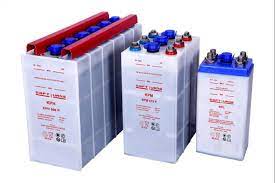 | nickel-cadmium battery (NiCd or NiCad) A nickel-cadmium battery (NiCd or NiCad) is a type of rechargeable (secondary) battery that uses nickel oxide hydroxide as the positive electrode,... View product → |
Frequently asked questions
When does a NiCd battery justify its higher purchase cost?
NiCd earns its premium when a failed battery threatens critical operations or the site faces freezing temperatures, sustained heat, vibration, repeated deep discharge, or difficult maintenance access.
How should you choose between NiCd and other industrial backup chemistries?
Match the chemistry to the backup duty by comparing discharge duration, current, ambient temperature, cycling, maintenance access, footprint, safety controls, and lifecycle cost.
How do you size a NiCd battery for industrial backup?
Use the complete discharge profile: required load current, backup duration, temperature, ageing allowance, cable losses, inverter efficiency, and the minimum end voltage.
What must agree before installing a NiCd battery system?
Confirm that the charger settings, battery-room ventilation, temperature controls, monitoring, emergency procedures, and safety documentation match the NiCd installation.
Keywords