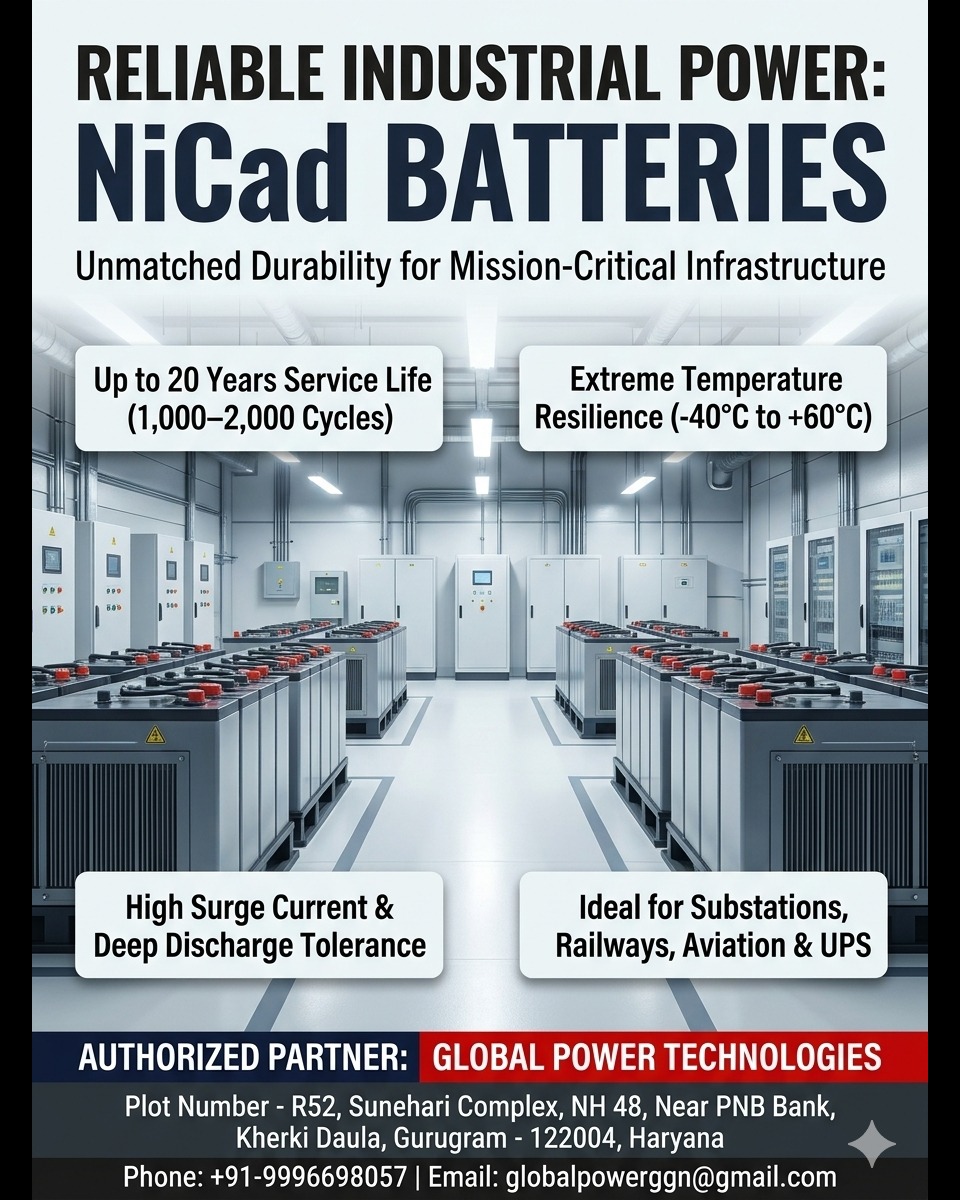
While lithium-ion batteries dominate modern consumer electronics, Nickel-Cadmium (NiCad) batteries remain an indispensable power source in critical industrial, aviation, and emergency backup systems. Known for their rugged durability, long cycle life, and ability to operate in extreme temperatures, NiCad batteries continue to power mission-critical infrastructure worldwide.
How Do NiCad Batteries Work?
A Nickel-Cadmium battery is a type of rechargeable battery that uses nickel oxide hydroxide for the positive electrode (cathode) and metallic cadmium for the negative electrode (anode), separated by an alkaline potassium hydroxide electrolyte.
During discharge, a chemical reaction converts these materials into nickel hydroxide and cadmium hydroxide, releasing a steady flow of electrical energy. When connected to a charger, the chemical process reverses, restoring the battery's capacity for hundreds or even thousands of cycles.
Key Advantages of NiCad Batteries
• Exceptional Durability & Cycle Life: Properly maintained industrial NiCad batteries can deliver over 1, 000 to 2, 000 charge-discharge cycles, often lasting 15 to 20 years in stationary standby applications.
• Extreme Temperature Tolerance: Unlike lead-acid or standard lithium-ion cells, NiCad batteries perform reliably in harsh climates ranging from -40°C to +60°C, making them ideal for outdoor substations and unheated facilities.
• High Discharge Rates: Low internal resistance allows NiCad batteries to deliver rapid bursts of high current without significant voltage drop—essential for engine starting and emergency switchgear tripping.
• Resistance to Abuse: They tolerate deep discharges, physical shock, vibration, and occasional overcharging far better than most other battery chemistries.
Common Industrial & Commercial Applications
Because of their unmatched reliability, NiCad batteries are widely deployed where failure is not an option:
• Power Utilities & Substations: Providing dependable DC backup power for switchgear, protection relays, and SCADA systems.
• Aviation & Railways: Serving as primary engine-starting and emergency onboard power supplies for aircraft, locomotives, and signaling systems.
• Oil, Gas & Petrochemical Plants: Powering offshore rigs, refineries, and emergency shutdown systems in hazardous environments.
• Emergency Lighting & UPS Systems: Ensuring uninterrupted illumination and backup power in hospitals, commercial complexes, and manufacturing plants.
Maintenance Best Practices: Avoiding the 'Memory Effect'
One well-known characteristic of NiCad batteries is the memory effect (voltage depression), where repeatedly recharging a partially discharged battery causes it to 'remember' a smaller capacity. To maximize lifespan and performance:
1. Perform Periodic Full Discharges: Run a controlled full discharge and recharge cycle every few months to reset cell capacity.
2. Use Proper Charging Equipment: Pair NiCad banks with temperature-compensated, constant-current chargers to prevent overheating.
3. Check Electrolyte Levels: For vented industrial pocket-plate NiCad cells, routinely inspect and top up distilled water levels as recommended by the manufacturer.
4. Recycle Responsibly: Because cadmium is a heavy metal, spent NiCad batteries must always be disposed of through certified industrial battery recyclers.
Partner with Global Power Technologies, Gurugram
When your operations demand extreme temperature resilience, high surge current, and a multi-decade service life, NiCad batteries offer proven, dependable performance that few modern alternatives can match.
For genuine industrial NiCad battery solutions, expert sizing consultation, and dedicated after-sales service, connect with Global Power Technologies, an authorized partner for industrial power and battery systems. Their experienced team can help you select the right battery bank and charging setup tailored to your facility's backup power requirements.
Contact Details:
• Company: GLOBAL POWER TECHNOLOGIES
• Address: Plot Number - R52, Sunehari Complex, NH 48, Near PNB Bank, Kherki Daula, Gurugram - 122004, Haryana
• Phone: +91-9996698057
• Email: globalpowerggn@gmail.com
Keywords