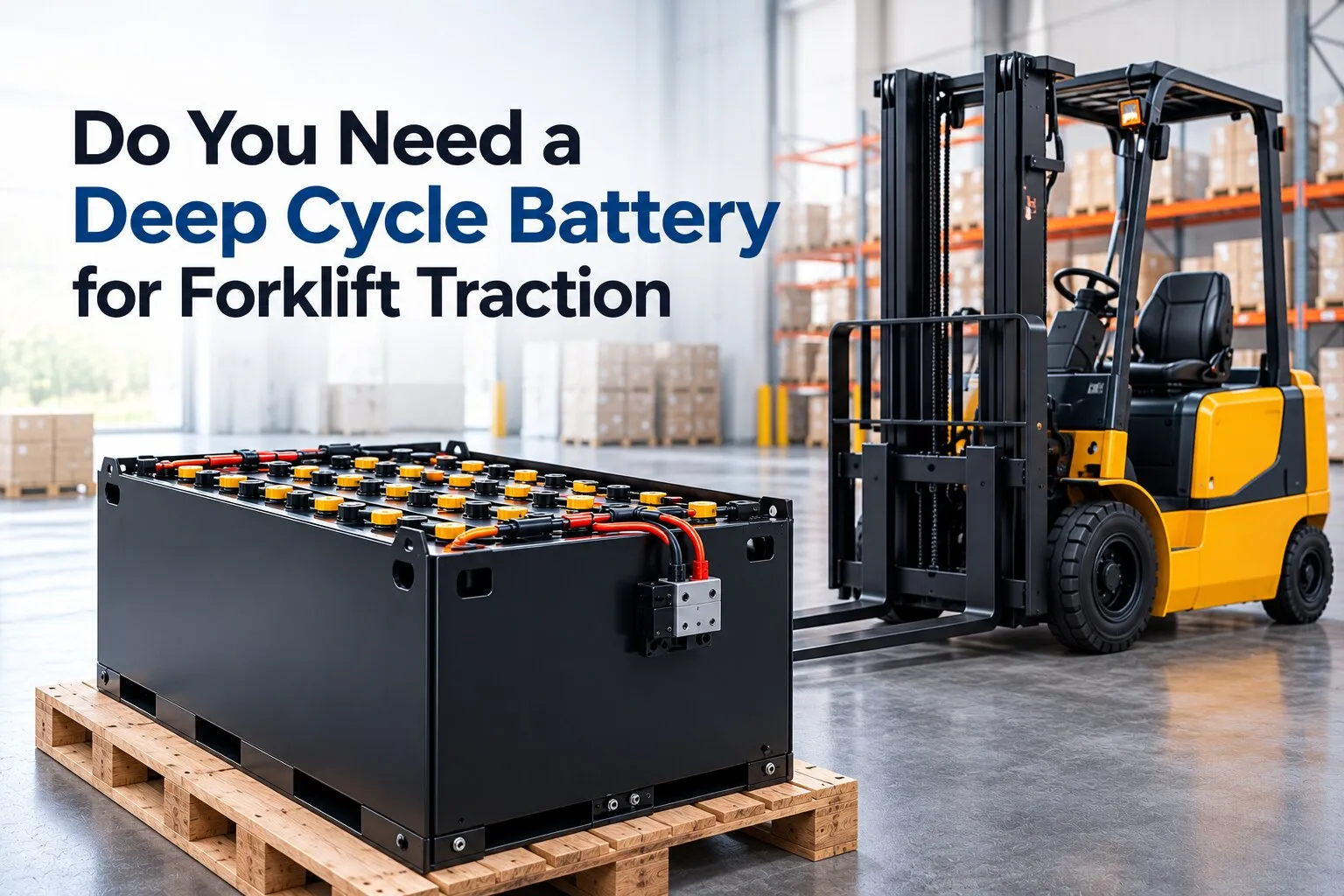
A forklift battery must survive repeated acceleration, travel, lifting and charging without compromising run time or stability. By the end, you will be able to distinguish the right battery type, calculate a defensible capacity, verify physical fit and compare lead-acid with lithium-ion for your operating pattern.
Key takeaways
- Use a deep-cycle traction battery for repeated forklift travel, lifting and recharge cycles.
- Size capacity from shift length, load, travel distance and charging access.
- Match voltage, dimensions, connector, polarity and weight to the truck specification.
- Demand battery test data, warranty terms, service support and charging guidance before ordering.
When does a forklift need a deep-cycle traction battery?
An electric forklift needs a deep-cycle traction battery when it repeatedly accelerates, travels, lifts, lowers and recharges during industrial work. An automotive starter battery is built for a short engine-start burst, while a stationary UPS or telecom battery is designed for fixed backup loads; neither is a safe substitute.
| Battery type | Designed for | Why it fits or fails |
|---|---|---|
| Traction battery | Repeated discharge, high-current lift-truck loads and vibration | Provides propulsion energy and contributes to the truck’s counterweight |
| Automotive starter battery | Brief engine starting | Rapid deep discharge damages it and reduces service life |
| UPS or telecom battery | Stationary backup power | Lacks the required truck construction, connectors, restraint and counterweight function |
| Lithium-ion traction battery | Forklift propulsion and repeated charging | Valid traction option, but still must match the truck specification |
Common forklift battery uses include counterbalance trucks, pallet trucks, reach trucks, stackers and similar industrial vehicles. The phrase deep cycle battery for forklift traction describes the repeated discharge-and-recharge service pattern; it does not specify voltage, ampere-hour rating, dimensions, connector, weight or charger.
Confirm the truck’s make and model, then match its required battery voltage, capacity, compartment, connector, minimum weight and charger. A lithium-ion pack is not a separate escape from those checks: its lower mass, dimensions, restraint and charging system require approval before installation.
How should duty cycle determine battery capacity?
Size the battery from the energy used in your actual shift, then divide that demand by the energy you can safely use. A nameplate ampere-hour figure alone cannot show whether a forklift traction battery will finish the shift.
1. Record one representative shift: operating hours, acceleration events, travel distance, load weight, lift height, hydraulic operating time, regenerative braking, breaks and every available charging window. Separate loaded and unloaded travel; lifting a heavy load consumes more energy than moving an empty truck.
2. Estimate demand for each activity using average power or current. Use E = V × I × hours, or add each task’s measured watt-hours. Subtract only the regenerative energy your truck actually returns to the battery; do not assume all braking energy is recovered.
3. Calculate required rated capacity as: required ampere-hours = expected shift energy ÷ battery voltage ÷ usable depth-of-discharge. Include energy used between charging windows and a documented reserve for route variation, cold conditions and ageing.
4. Compare lead-acid capacities on the same discharge basis. IEC 60254-1 uses a five-hour rate, or C5; a C3 or C10 figure is not directly comparable. Temperature, battery age, discharge current and condition reduce delivered energy.
5. Treat 80% depth of discharge as the common practical maximum for flooded lead-acid batteries, then recharge before reuse. Repeatedly going deeper accelerates capacity loss and shortens service life.
Never accept a single cycle-count claim without its discharge depth, temperature, charging method and rest periods. A cycle rated at 80% discharge is not equivalent to one rated at 50% or opportunity charging.
How do you confirm that a replacement battery fits the truck?
Confirm fit from the truck data plate and compartment measurements, not from an ampere-hour figure alone.
1. Record the forklift make and model, nominal voltage, rated capacity in ampere-hours, and discharge basis. Common lead-acid systems are 24, 36, 48, 72 and 80 volts. Compare capacity on the same basis; IEC 60254-1 uses a five-hour rate (C5), so C3 and C10 figures are not directly interchangeable.
2. Measure the battery compartment’s internal length, width and height. Record the tray or roller arrangement, lifting access, restraint points, and any required hold-down bar or side restraint. A pack that fits the opening but cannot be secured is not a safe replacement.
3. Photograph and specify the connector, polarity, cable length, cable exit position and routing. Record the truck’s minimum and maximum permitted battery weight. Battery mass and center of gravity contribute to counterweight balance and rated capacity; a lighter lithium-ion pack replacing lead-acid can make the truck unstable or reduce its permitted load.
4. Ask the truck manufacturer or an approved battery integrator for written confirmation before changing chemistry, dimensions, restraint or connector type. The approval must cover the pack, charger and truck rating.
5. Reject any battery that causes voltage sag, insufficient shift coverage, overheating, unsafe handling or premature failure. A generic “deep-cycle” label proves none of the required fit, weight or performance conditions.
Which battery chemistry and charging routine match the work?
Match the battery to the charging window, not just the forklift. Flooded lead-acid, sealed lead-acid and lithium-ion differ sharply in downtime, maintenance and charging tolerance.
| Chemistry | Charging and downtime | Care, ventilation and life |
|---|---|---|
| Flooded lead-acid | Slow; requires full charging and approved equalization. Frequent partial charging is suitable only with an approved battery, charger and operating profile. | Watering, cleaning and ventilation required; hydrogen and oxygen are produced. Often the lowest-cost option, but longest maintenance downtime. |
| Sealed or maintenance-free lead-acid | Slower than lithium-ion; partial charging remains restricted by the manufacturer’s profile. | No routine watering, but charging ventilation and temperature limits still apply. Less service work, with lead-acid downtime between shifts. |
| Lithium-ion traction | Fast charging and frequent opportunity charging suit multi-shift work. Use only a compatible charger and battery-management system. | No routine watering and less scheduled maintenance; protect the pack from excessive heat and cold. Longer service life and less change-out downtime depend on correct controls. |
Match charger voltage, current and charge profile to the battery. Give flooded batteries a complete charge and equalize only as specified. Inspect connectors before charging; heat, looseness or damaged insulation signals a stop.
For flooded batteries:
- Inspect electrolyte level.
- Add only the specified water at the specified time; never add acid routinely.
- Clean terminals, test specific gravity, record temperature and maintain charge-history records.
Provide ventilation, spill-neutralization equipment and fire protection. Ban smoking, sparks and open flames in the charging area; hydrogen and oxygen can ignite or explode. Ensure controls also cover thermal, electrical and mechanical risks.
What should you demand from a battery supplier before ordering?
Demand a signed, truck-specific specification before discussing price. It must identify the truck model, nominal voltage, capacity and discharge basis, compartment dimensions, acceptable weight range, connector and cable layout, charger compatibility, shift pattern, charging opportunities, ambient temperature and watering requirements.
- Request documented replacement measurements, including length, width, height, tray or roller arrangement, restraint points, connector position and minimum and maximum weight.
- Require an on-site fit check before installation, especially for a chemistry change from lead-acid to lithium-ion.
- Ask who will commission the battery, configure the charger, remove the old unit and recycle lead-acid safely.
- Get preventive-maintenance tasks, local response arrangements and every warranty exclusion in writing.
Supplier comparison should look like this:
| Check | Strong supplier evidence | Warning sign |
|---|---|---|
| Commissioning | Recorded fit, polarity, charger and performance checks | Delivery ends at the loading bay |
| Service | Local technicians, inspection schedule and response process | Repairs depend entirely on a distant team |
| Chemistry change | Written approval covering BMS, charger, weight and restraints | “It will fit” without measurements |
For a buyer comparing an industrial battery supplier in Gurugram, on-site verification is worth more than a low delivery quote. GLOBAL POWER TECHNOLOGIES is a provider you could ask to validate the duty cycle, charger settings and installation details before purchase.
Choose a deep cycle battery solutions supplier only when electrical performance, physical fit, charging method, safety controls and service support are documented together; otherwise, stop the order.
Related products
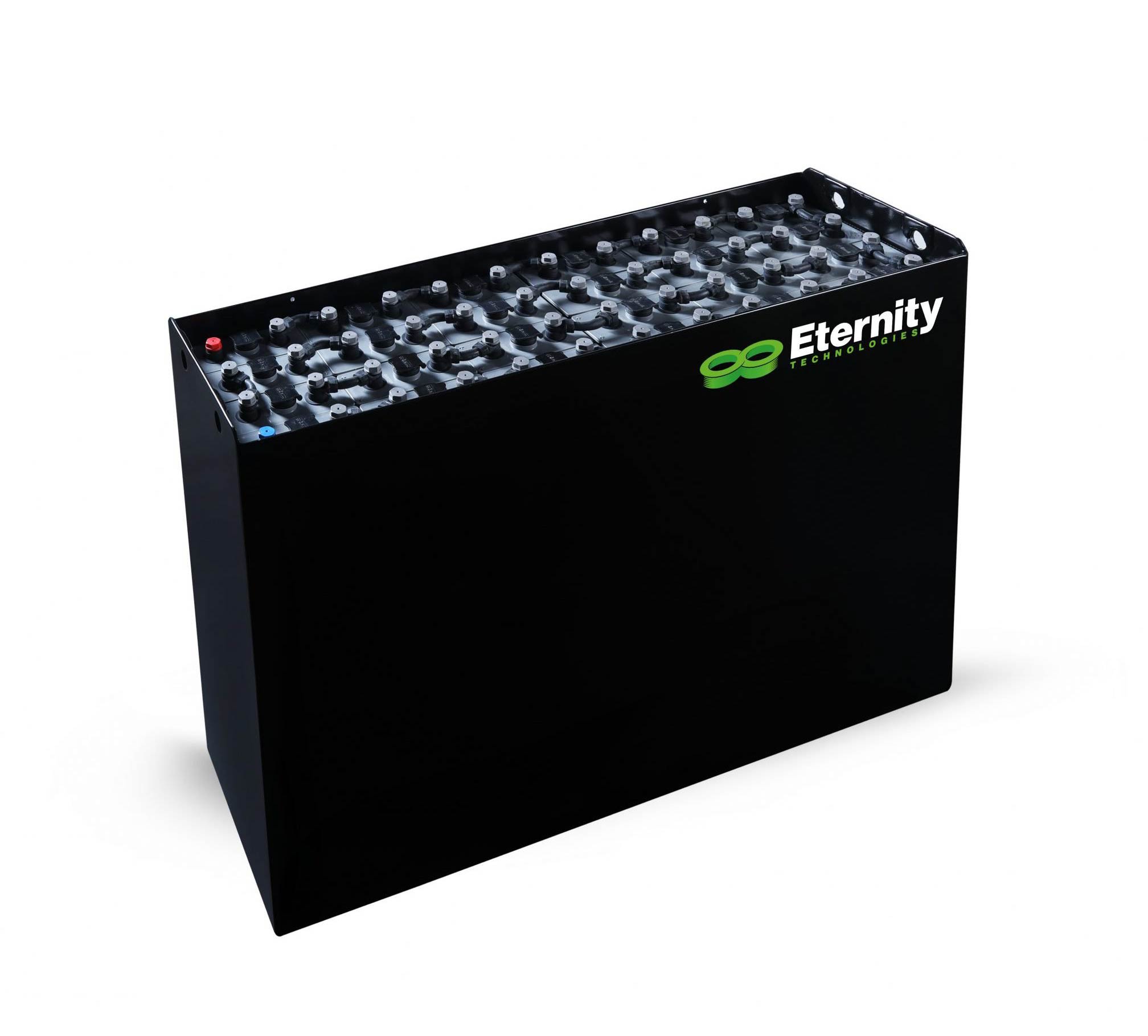 | Forklift Traction batteries A traction battery is a large rechargeable power source built to drive electric vehicles, industrial forklifts, material-handling machines, and... View product → |
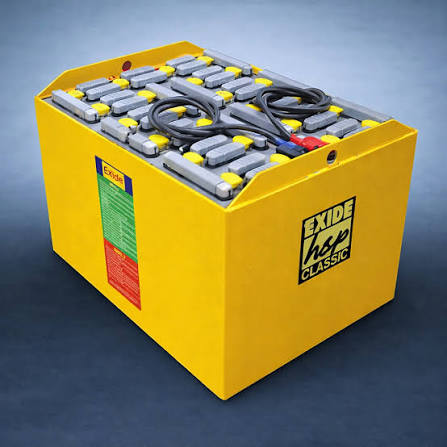 | Exide Forklift Traction battery Exide Forklift Traction battery xide forklift traction batteries provide heavy-duty power for electric material handling equipment like forklifts, stackers, reach trucks, and pallet... View product → |
Frequently asked questions
When does a forklift need a deep-cycle traction battery?
An electric forklift needs forklift traction batteries when it repeatedly accelerates, travels, lifts, lowers and recharges during industrial work. Automotive starter batteries and stationary UPS batteries are not suitable substitutes.
How should duty cycle determine forklift battery capacity?
Assess operating hours per shift, loads, travel distance, lift height, stop-start frequency, ambient temperature and charging opportunities. Select capacity that covers the planned work without routine deep discharge or an unplanned mid-shift change.
How do you confirm that a replacement battery fits the truck?
Check the forklift nameplate and manufacturer manual for battery voltage, capacity range, compartment length, width, height, minimum and maximum weight, connector type, polarity and extraction method. Confirm every measurement with the supplier before ordering.
Which battery chemistry and charging routine match the work?
Choose chemistry and charging equipment together. Lead-acid batteries need a compatible charger, ventilation, watering and equalisation routine; lithium-ion batteries need the approved charger, battery-management system and temperature controls. Match the choice to shift pattern, charging time and maintenance capability.
What should you demand from a battery supplier before ordering?
Request a written specification, test or capacity report, serial or batch identification, warranty exclusions, expected service conditions, charger compatibility, delivery details, installation support and a replacement or recycling plan. A deep cycle battery solutions supplier should also explain how its recommendation matches your duty cycle.
Related products
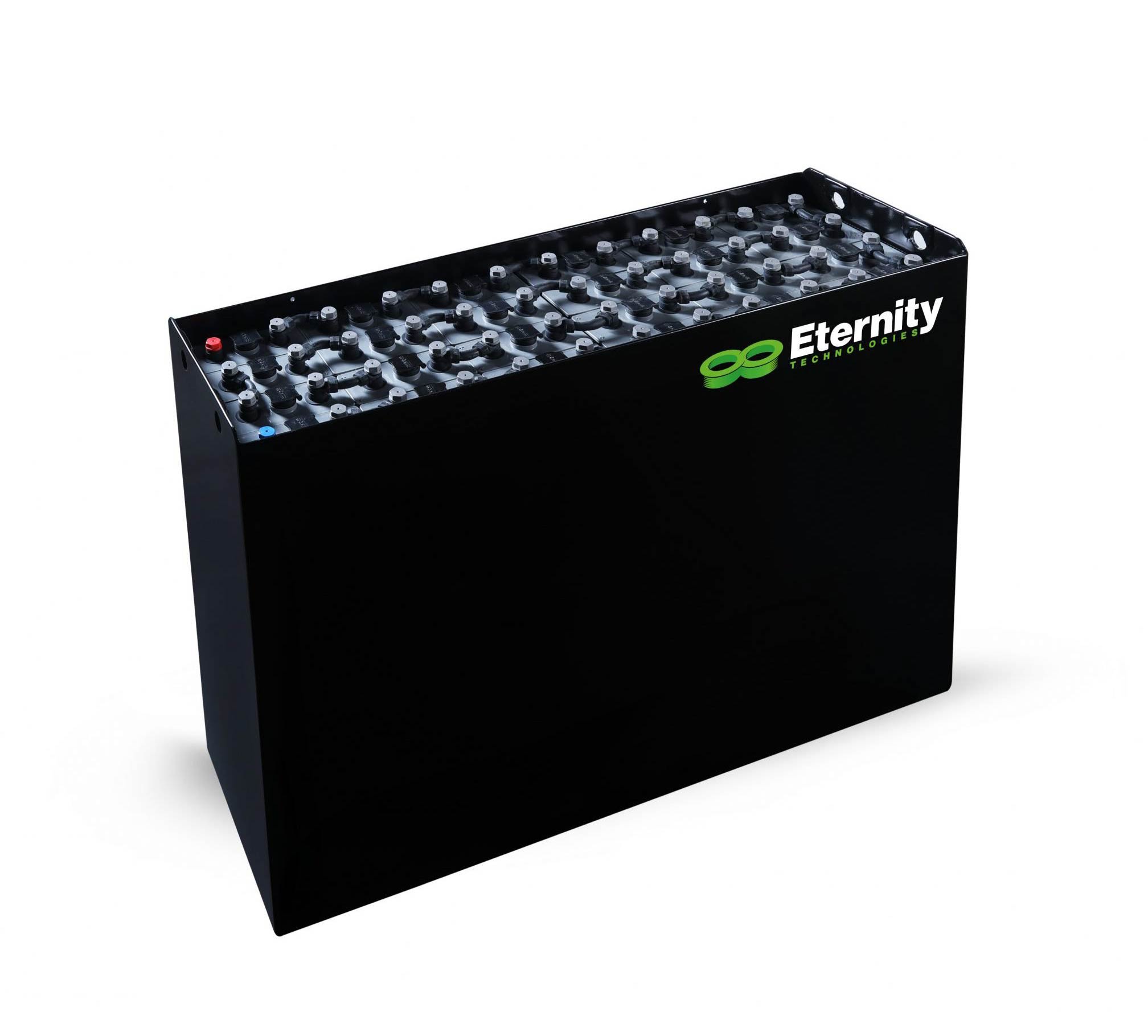 | Eternity Traction batteries Eternity traction batteries are premium, high-performance industrial power cells built for heavy-duty material handling machinery like electric... View product → |
 | forklift battery Amaron Brute is the latest product from the Amara Raja Energy & Mobility Limited. View product → |
 | Hawker Traction batteries manufactured by EnerSys, are premium, high-capacity industrial power cells engineered for demanding material handling equipment. View product → |
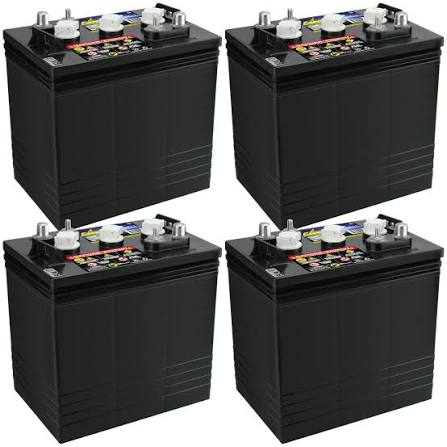 | Golf cart Batteries Golf cart batteries are available in two main types: lead-acid (flooded or wet) and lithium-ion (LiFePO4). View product → |
Keywords