A safe replacement battery requires more than a voltage and ampere-hour label. You will be able to build a complete specification request, match an Eternity pack to a vehicle and charger, estimate duty-cycle requirements, and compare installation and operating demands before ordering in Gurugram.
Key takeaways
- Demand a model-specific specification sheet, not a quote showing only voltage and ampere-hours.
- Match battery voltage, C5 capacity, dimensions, connector and weight to the vehicle.
- Check charger compatibility, charging ventilation and maintenance access before ordering.
- Record baseline test results and confirm local replacement and service support.
The Eternity specification sheet you should demand before comparing models
A nominal ampere-hour figure cannot tell you whether Eternity traction batteries will complete a commercial shift. Demand a model-specific sheet and application record, not a quotation that says only “48 V, 600 Ah.”
1. Model name, exact part number, nominal voltage, cell count and chemistry. State whether the pack is 24 V, 36 V, 48 V, 72 V or 80 V, and identify lead-acid cells or lithium-ion chemistry.
2. Rated capacity with its discharge basis: C5 or C20, rated discharge duration, end-of-discharge voltage and usable kWh. Two packs with the same Ah rating can deliver different usable energy and cycle life.
3. Overall length, width and height; mass; centre-of-gravity limits; tray or lifting arrangement; terminal type; polarity; cable exit; connector and restraint points. These dimensions must match the vehicle compartment, not just the electrical rating.
4. Permitted operating and charging temperature range, protection limits, ventilation requirement, electrolyte details for lead-acid, or battery-management-system limits for lithium.
5. Approved charger voltage and current, charging profile, equalisation requirement, recharge time and allowable recharge windows.
6. The quotation’s duty assumptions: average and peak current, duty hours, pallet movements or distance per shift, payload, grade, regenerative braking, ambient temperature and required reserve.
Ask for IEC 62485-3 safety provisions covering shock, short circuit, electrolyte, charging and ventilation. A lithium replacement also needs documented vehicle communication or interlock compatibility; it is not a drop-in substitute for lead-acid. These are essential commercial vehicle battery specifications, not optional comparison notes.
How to match voltage, capacity, dimensions and connector to the vehicle
Start with the vehicle, not the catalogue. A battery fits only when its electrical rating, physical envelope, connector and mass match the vehicle manufacturer’s limits.
1. Photograph the vehicle nameplate and original battery label. Record nominal voltage, Ah rating, C5 or C20 test duration, cell count, polarity, terminal arrangement and connector part number. A 24 V pack has 12 lead-acid cells; 36 V has 18; 48 V has 24; 72 V has 36; and 80 V has 40.
2. Measure the battery compartment, tray, cable-exit position and restraint points. Compare length, width, height, lifting arrangement and mass with the replacement drawing. The pack must sit securely and preserve the specified centre of gravity; a heavier or differently balanced pack can make a forklift or reach truck unstable.
3. Match capacity to work, not just the printed Ah figure. Give the supplier average and peak current, duty hours, pallet movements, grade, payload, ambient temperature, recharge windows, regenerative-braking behaviour and required reserve. Confirm the rated discharge duration and end-of-discharge voltage behind the quoted capacity.
4. Plug in the connector details before ordering. Confirm housing, pin arrangement, polarity, cable gauge and cable-exit direction; a similar-looking connector can reverse polarity or overheat under traction current. Apply the same checks to pallet trucks and AGVs, where compact trays and vehicle-specific plugs leave little tolerance.
| Voltage | Common use | Check |
|---|---|---|
| 24 V | Pallet trucks | Nameplate and cell count |
| 36 V | Reach trucks | OEM voltage |
| 48 V | Forklifts and AGVs | Peak current |
| 72–80 V | Heavy forklifts | Charger and mass |
For eternity traction batteries for commercial vehicles in gurugram, request commercial vehicle battery specifications showing these values, plus operating temperature and permitted mass. Verify the charger profile before installation.
How duty cycle, C5 capacity and chemistry determine usable energy
A shift battery must cover energy demand, peak power and reserve, not just a nameplate Ah figure. Calculate shift energy from each operating segment: vehicle power in kW multiplied by operating hours, then add lifting, accessories, gradients and conversion losses. Include a reserve for traffic variation and battery ageing.
Use this calculation:
- Record average and peak current, duty hours, distance or pallet movements, payload, grade, ambient temperature and regenerative-braking input.
- Convert the result to ampere-hours: required Ah = shift energy in kWh × 1,000 ÷ system voltage.
- Divide required Ah by the permitted depth of discharge, then add the specified reserve. Do not treat C5 capacity as fully usable.
- Check that peak current stays below the battery’s discharge limit and that the charger can restore the consumed energy during the available window.
C5 means the stated Ah capacity at a five-hour discharge rate. A C20 rating uses a 20-hour rate, so two equal-looking capacities are not directly comparable. Ask for rated discharge duration, end-of-discharge voltage, temperature derating and usable kWh for the actual duty cycle.
Chemistry changes the answer:
| Chemistry | Practical effect | Best fit |
|---|---|---|
| Lead-acid | Lower initial cost; needs ventilation, watering and cooling | Fixed shifts with long charging windows |
| Lithium-ion | Higher usable energy and opportunity charging; needs BMS, compatible charger and interlocks | Multi-shift fleets with short recharge windows |
Opportunity charging is not automatically safe for every lead-acid pack. Match the permitted profile, connector rating and cooling limits when comparing eternity traction batteries and other battery power solutions for commercial vehicles.
Charger, charging area and maintenance requirements in Gurugram
Choose the charger by battery chemistry, nominal voltage, capacity and manufacturer charging profile—not by connector fit. A PzV valve-regulated pack needs a PzV-compatible charger; a PzS flooded pack needs its specified charge curve. Substituting either charger can cause undercharging, gassing, heat and shortened life. Lithium packs require BMS communication and documented charge-temperature limits.
Specify these controls for battery power solutions for commercial vehicles:
- Ventilation sized for charging gas, with no smoking, flames or ignition sources.
- An eyewash station, spill-control material, insulated tools and accessible isolation switches.
- Protected charging bays that prevent vehicle movement and keep cables off travel paths.
- Temperature measurement for the battery and charging area, not just the building.
Gurugram’s hot periods make temperature a design input. Record battery temperature during charging and apply the manufacturer’s voltage compensation or charger cut-out limits; continued charging above the permitted range accelerates degradation and can trigger protection. Keep the battery compartment clear and ventilation openings unobstructed.
For eternity traction batteries for commercial vehicles in Gurugram, set a documented routine. Inspect the case, valves, terminals, connectors and cables before each shift; clean corrosion with the approved method and investigate loose connections, swelling, leaks or unusual heating immediately.
For PzS batteries, check electrolyte level and add only de-ionised or distilled water after charging and cooling. Do not promise a fixed watering calendar without duty and temperature data. Use IEC 62485-3 as the safety reference for shock, short-circuit, electrolyte, charging and ventilation controls.
How to buy, test and support a replacement battery locally
A low catalogue price does not protect your shift. Before choosing a traction battery supplier in Gurugram, make the quotation specific to your vehicle, route and charging window—not just its nominal Ah rating.
1. Request a written quotation for the vehicle’s average and peak current, duty hours, pallet movements or travel distance per shift, payload, grade, regenerative braking, ambient temperature, recharge window and required reserve. Ask for voltage, C5 or C20 capacity, dimensions, mass, connector, polarity and cable-exit details.
2. Require traceable battery records: manufacturing date, cell or block identification, rated capacity, test method and test result. Confirm the pack fits the tray, restraint points and permitted mass range, with the correct centre of gravity. An electrically compatible battery can still make a vehicle unstable.
3. Put service terms in writing before ordering. Include warranty exclusions, failure-response time, on-site commissioning, charger validation, replacement connector and cable availability, temperature measurement, ventilation checks and a documented return or recycling route. IEC 62485-3 is the relevant safety reference for traction-battery installation, including shock, short-circuit, electrolyte, charging and ventilation hazards.
4. At acceptance, record open-circuit voltage, polarity, connector fit, physical restraints, charger settings and temperature. Run a controlled charge and vehicle trial, then document voltage or current behaviour under the normal load; do not accept a pass based only on a display reading.
GLOBAL POWER TECHNOLOGIES can be useful when its local team records these commissioning results and support commitments rather than treating installation as delivery. Ask for copies before signing the handover.
Related products
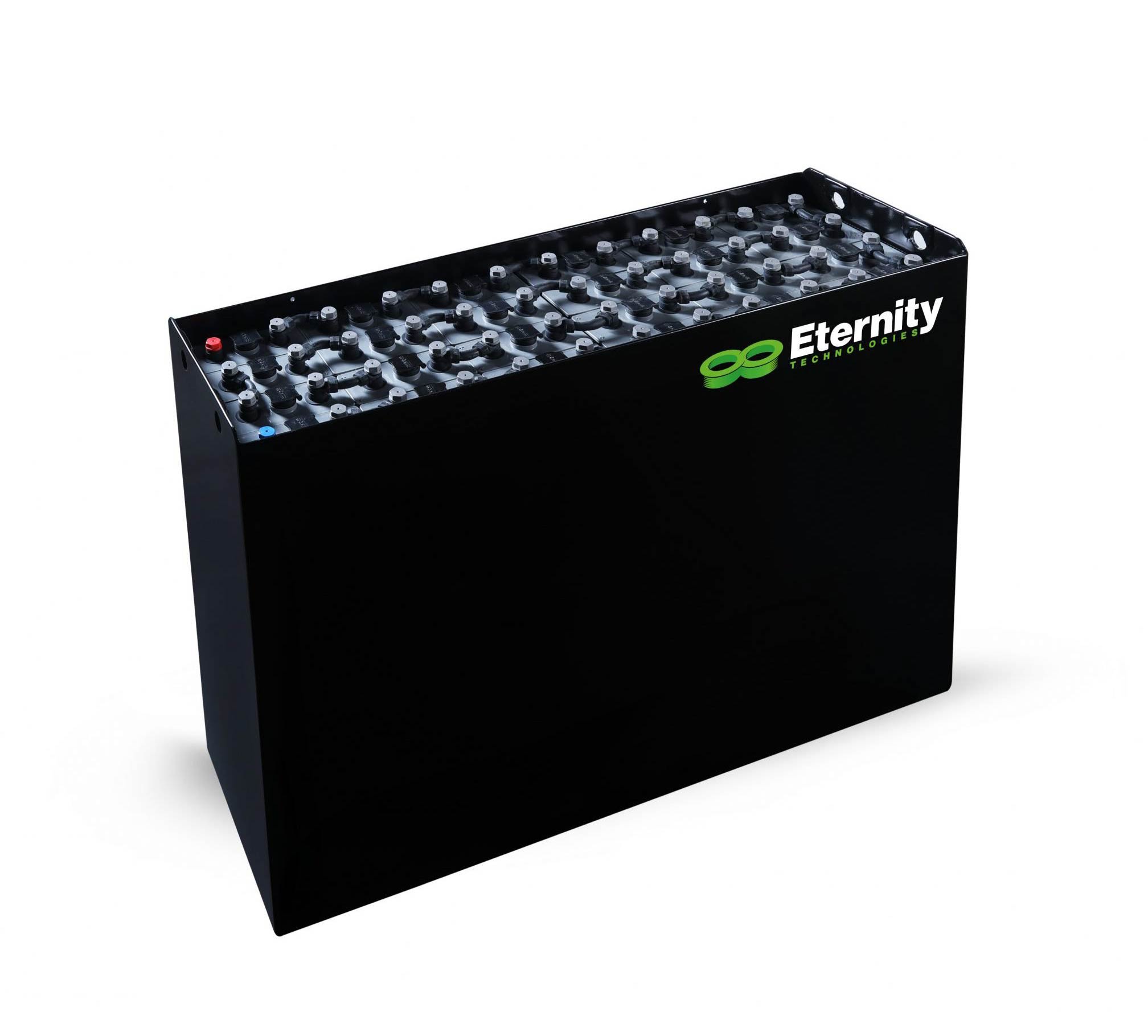 | Eternity Traction batteries Eternity traction batteries are premium, high-performance industrial power cells built for heavy-duty material handling machinery like electric... View product → |
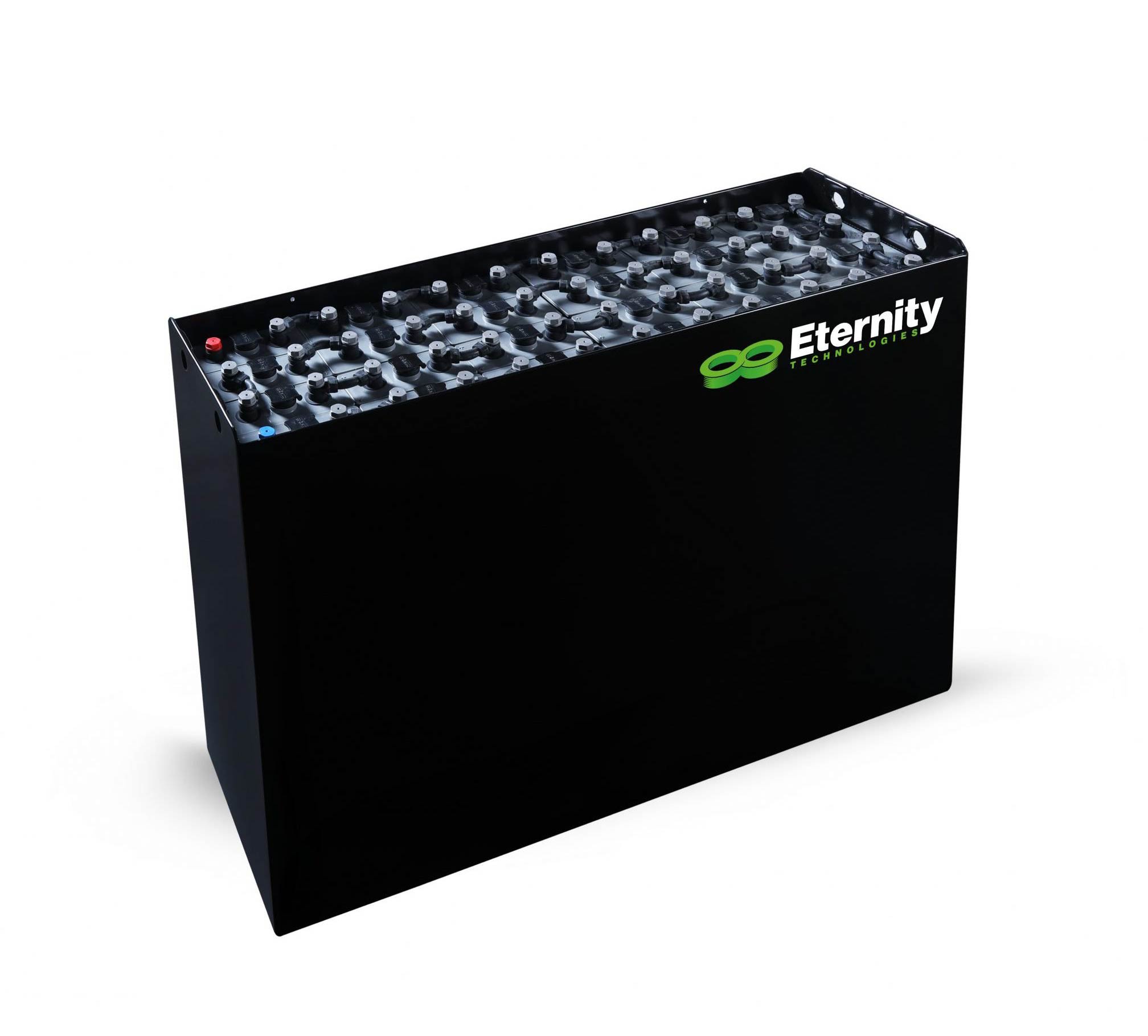 | Forklift Traction batteries A traction battery is a large rechargeable power source built to drive electric vehicles, industrial forklifts, material-handling machines, and... View product → |
Frequently asked questions
What should a commercial vehicle battery specification sheet include?
Request the model number, nominal voltage, C5 capacity, dimensions, weight, connector type, chemistry, charging limits, operating conditions and warranty terms.
How do you match an Eternity traction battery to a commercial vehicle?
Compare the vehicle’s required voltage, C5 capacity, battery compartment dimensions, connector, cable routing, weight limit and approved charger settings with the battery sheet.
Why does C5 capacity matter for commercial vehicle batteries?
C5 capacity measures ampere-hours at a five-hour discharge rate. Compare batteries tested at the same C5 rate before estimating shift energy or runtime.
What should you check before installing a replacement traction battery in Gurugram?
Verify charger compatibility, charging-area ventilation, temperature exposure, lifting access, connector fitment, maintenance procedures and availability of local testing and service support.
Keywords