A “48 V Hawker battery” is not a complete specification: buyers still need the cell count, rated Ah test, dimensions, mass, connector, charger profile, and duty-cycle fit. By the end, you will be able to read a Hawker specification sheet, compare quotations on equal terms, and verify that a replacement suits the truck, charger, and operating schedule.
Key takeaways
- Compare test conditions, not just quoted voltage and brand.
- Match battery dimensions, mass, connector, and voltage to the forklift.
- Size Ah capacity for shift length, discharge depth, and charging access.
- Confirm charger settings and flooded-battery watering and inspection routines.
Read the Hawker specification sheet before comparing prices
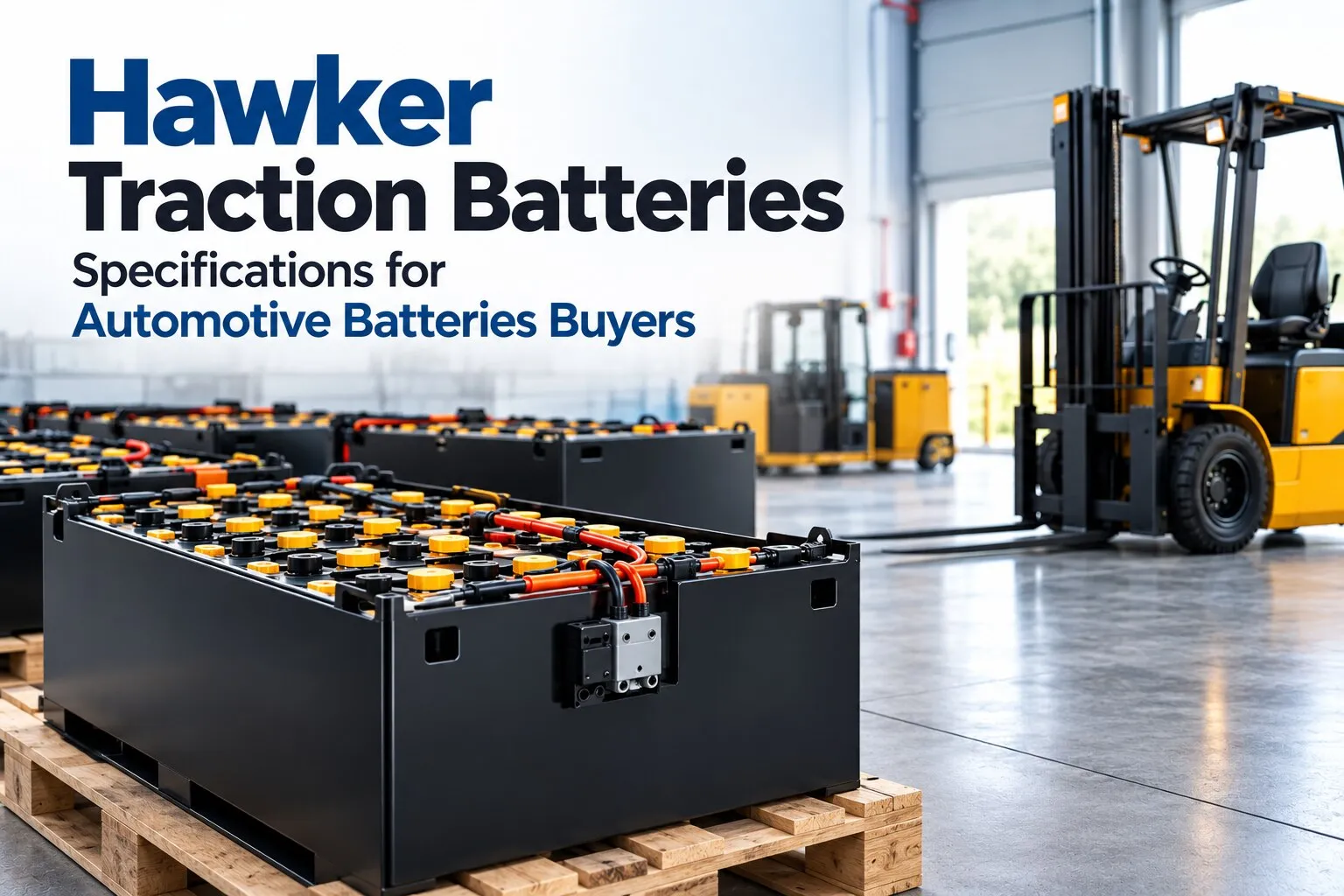
A price comparison is useless if one quote says “Hawker, 48 V” and another gives test conditions. Hawker traction batteries are built for repeated deep discharge and recharge; automotive batteries are normally judged by short engine-starting performance, especially cold-cranking amps.
EN 50342 covers starter batteries, while IEC 60254-1 covers lead-acid traction batteries, so do not compare their headline numbers.
| Figure | What the comparison must show | Why it matters |
|---|---|---|
| Nominal voltage and cell count | Voltage plus the number of 2 V cells | Confirms the pack architecture |
| Capacity | Ah rating, discharge rate such as C5, final voltage, and test temperature | A C5 capacity is not comparable with an automotive Ah figure or a C20 rating |
| Duty data | Ampere-hour demand per shift, discharge depth, peak current, ambient temperature, and available charging time | Shows whether the battery suits the actual work cycle |
| Physical and electrical details | Dimensions, mass, terminal type, connector, cables, and charger compatibility | Exposes fit, handling, and charging conflicts before purchase |
| Traceability | Cell or monobloc model, technology, manufacture date, warranty exclusions, and commissioning requirements | Makes two supplier offers verifiable |
For hawker traction batteries automotive batteries for specifications, use the manufacturer’s document rather than a marketplace title. Ask for traction battery specifications that state whether capacity is measured at C5, normally to 1.70 V per cell, and record the charger and maintenance regime. A quote missing these figures is not technically comparable.
Match voltage, dimensions, and battery mass to the forklift
Confirm fit against the truck’s data plate and battery compartment. Use the old battery as a cross-check, not as the only evidence. A proposed pack must have the truck’s nominal voltage and the correct number of 2 V cells; a 48 V lead-acid pack, for example, normally contains 24 cells.
Check these traction battery specifications before approving the quotation:
- Length, width, height, tray clearance, roller spacing, and battery-compartment opening
- Battery mass against the forklift’s permitted battery-weight range
- Retaining bars, stops, lifting points, and any required lifting frame
- Connector type, cable gauge, cable-exit position, polarity, and cable length
- Rated capacity and test rate, such as C5, matched to the truck manufacturer’s requirement
A battery that fits the tray can still fail in service if its cable exits on the wrong side, its connector does not mate with the truck, or its mass falls outside the counterweight range. Confirm the dimensions and mass on the supplier’s drawing, then measure the compartment and compare the truck’s data plate.
Do not approve a quote that says only “Hawker battery, 48 V.” Require the exact cell or monobloc model, manufacture date, charger compatibility, and commissioning requirements. Do not replace a traction pack with an automotive starter battery: starter batteries prioritise cranking current, while forklift batteries are built for repeated deep discharge.
Size Ah capacity for the actual shift and charging pattern
A battery that lasts one shift on paper can fail before lunch if the truck lifts heavy loads, travels long distances, works in cold conditions, or has too little charging time.
Size Hawker traction batteries from the complete duty cycle: truck voltage, Ah used per shift, discharge depth, peak current, ambient temperature, and hours available for charging.
| Operating condition | Capacity decision | Why it matters |
|---|---|---|
| Heavy loads, frequent lifting, long travel | Choose more usable Ah than the measured average demand | High current and repeated acceleration increase energy use and voltage sag |
| Cold rooms or outdoor winter work | Add the manufacturer’s temperature correction | Cold electrolyte delivers less available capacity and accepts charge less readily |
| Short charging window or no opportunity charging | Choose enough Ah for the full shift at the specified discharge rate | A short recharge cannot replace a deeply discharged pack |
| Regular opportunity charging | Confirm that the battery technology and charger permit it | Flooded batteries and TPPL or lithium-ion packs follow different charging limits |
Use the battery maker’s stated capacity at C5 unless the truck manufacturer specifies another rate. C5 means a five-hour discharge to the stated final voltage, commonly 1.70 V per cell at the reference temperature; a C20 figure is not directly comparable.
Keep reserve capacity within the battery maker’s limits rather than routinely discharging to empty. Do not substitute an automotive starter battery: its Ah and cranking-current ratings describe engine starting, not repeated deep discharge in a forklift.
Verify the charger and flooded-battery maintenance regime
Confirm the charging and maintenance regime before you approve the battery: a correct voltage and capacity will not prevent failure if the charger profile, ventilation, watering, or equalisation plan is wrong. The traction battery specifications must name the chemistry, cell or monobloc configuration, compatible charger, charge current, charge duration, connector, and operating-temperature limits.
1. Match the charger to the battery technology and pack configuration. A flooded lead-acid profile is unsuitable for TPPL/AGM or lithium-ion batteries. Confirm the charger can deliver the required output within the available charging window; insufficient output causes chronic undercharging, sulfation, or excessive heat.
2. Provide ventilation for flooded batteries because charging releases hydrogen and oxygen. Confirm the charging room has the site’s required air exchange, clear separation from flames and sparks, and no blocked vents. Do not assume the same arrangement suits TPPL or lithium-ion equipment.
3. Water flooded cells only after charging, once the electrolyte level has stabilised. Use the battery maker’s specified water quality, keep plates covered without overfilling, and never add acid during routine topping-up. Filling before charging can force electrolyte out through the vents.
4. Define cleaning and inspection responsibility. Remove electrolyte residue, dirt, and corrosion using the maker’s approved method; keep the battery top dry and check terminals, cables, connectors, and vent caps for looseness or damage.
5. Confirm the equalisation method and interval for flooded batteries, including charger settings and records. Do not equalise TPPL or lithium-ion packs unless their manufacturer explicitly permits it. Get every exclusion in writing.
Turn the specification into a purchase and supplier checklist
Demand a line-by-line quotation, not “Hawker battery, 48 V.” A traction pack is built for repeated deep discharge; an automotive starter battery is judged mainly by short-duration cranking current. Their Ah figures are not comparable unless the supplier states the test rate and final voltage.
1. Require the battery technology, cell or monobloc model, nominal voltage, number of cells, rated Ah capacity, C5 or C20 test rate, final-voltage endpoint, dimensions, mass, manufacture date, terminal type, connector, cable length and cable exit.
2. Provide the forklift data plate, compartment measurements, tray and roller spacing, retention method, old battery photograph, and charger nameplate. Ask the automotive battery supplier in Gurugram to confirm voltage, polarity, hold-down fit, connector compatibility and available charging time from those records, not from a model-name match.
3. Put the duty cycle in writing: Ah used per shift, discharge depth, maximum current, ambient temperature, shift pattern, opportunity charging and recharge window. Require written confirmation that the proposed Hawker pack meets that duty cycle and that the charger is compatible.
4. For an automotive comparison, request cold-cranking performance, reserve capacity, date code, warranty exclusions, return terms and recycling arrangements. For flooded traction batteries, record commissioning, specified water quality and watering-after-charging instructions; topping up with acid is not routine maintenance.
Use this checklist as an automotive batteries buyer guide. With GLOBAL POWER TECHNOLOGIES or any other supplier, reject a quote that omits test conditions, warranty terms or physical-fit evidence.
Related products
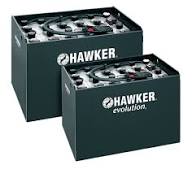 | Hawker Traction batteries manufactured by EnerSys, are premium, high-capacity industrial power cells engineered for demanding material handling equipment. View product → |
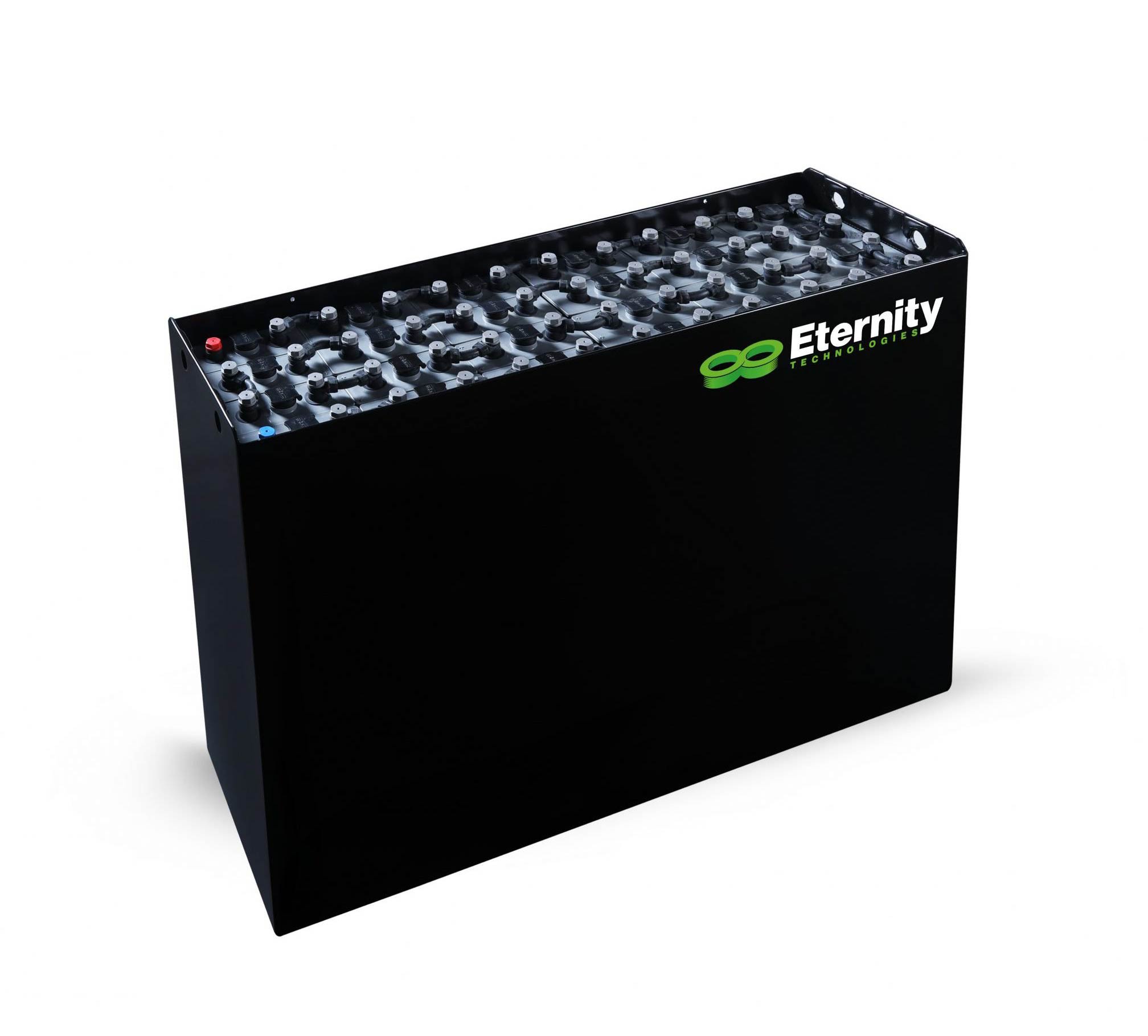 | Forklift Traction batteries A traction battery is a large rechargeable power source built to drive electric vehicles, industrial forklifts, material-handling machines, and... View product → |
Frequently asked questions
Why should buyers read the Hawker specification sheet before comparing prices?
Quotes can describe the same battery with different test conditions or omit important details. Check voltage, Ah rating, dimensions, mass, discharge rate, and stated test method before comparing prices.
How do you match a traction battery to a forklift?
Confirm the forklift’s required voltage, battery-compartment length, width and height, permitted battery mass, connector, and retention method. A battery that fits electrically but exceeds the forklift’s mass range is not a suitable replacement.
How should buyers size Ah capacity for a forklift shift?
Use operating hours, load intensity, travel distance, lift height, breaks, discharge limits, and charging opportunities. Compare the expected energy demand with the battery’s Ah rating under the specification sheet’s stated test conditions.
What charger and maintenance details must buyers verify?
Match the charger’s output voltage, charging profile, current, connector, and battery chemistry to the battery. For flooded batteries, plan watering with approved water, electrolyte-level checks, ventilation, cleaning, and documented inspections.
Keywords