A quoted battery price can cover anything from interconnected cells to a complete installed, tested, and commissioned power system. By separating the physical battery, compatibility data, charging equipment, delivery work, and handover services, you can compare commercial fleet battery options without accepting hidden costs or an unsafe substitute.
Key takeaways
- Demand cells, tray, connectors, terminals, cables, electrolyte, and warranty documents.
- Match voltage, capacity, dimensions, connector, and battery weight to the forklift.
- Separate cell-only prices from delivery, fitting, removal, testing, and commissioning costs.
- Require identification, charging checks, safety inspection, and operator handover before use.
What a forklift battery purchase should contain
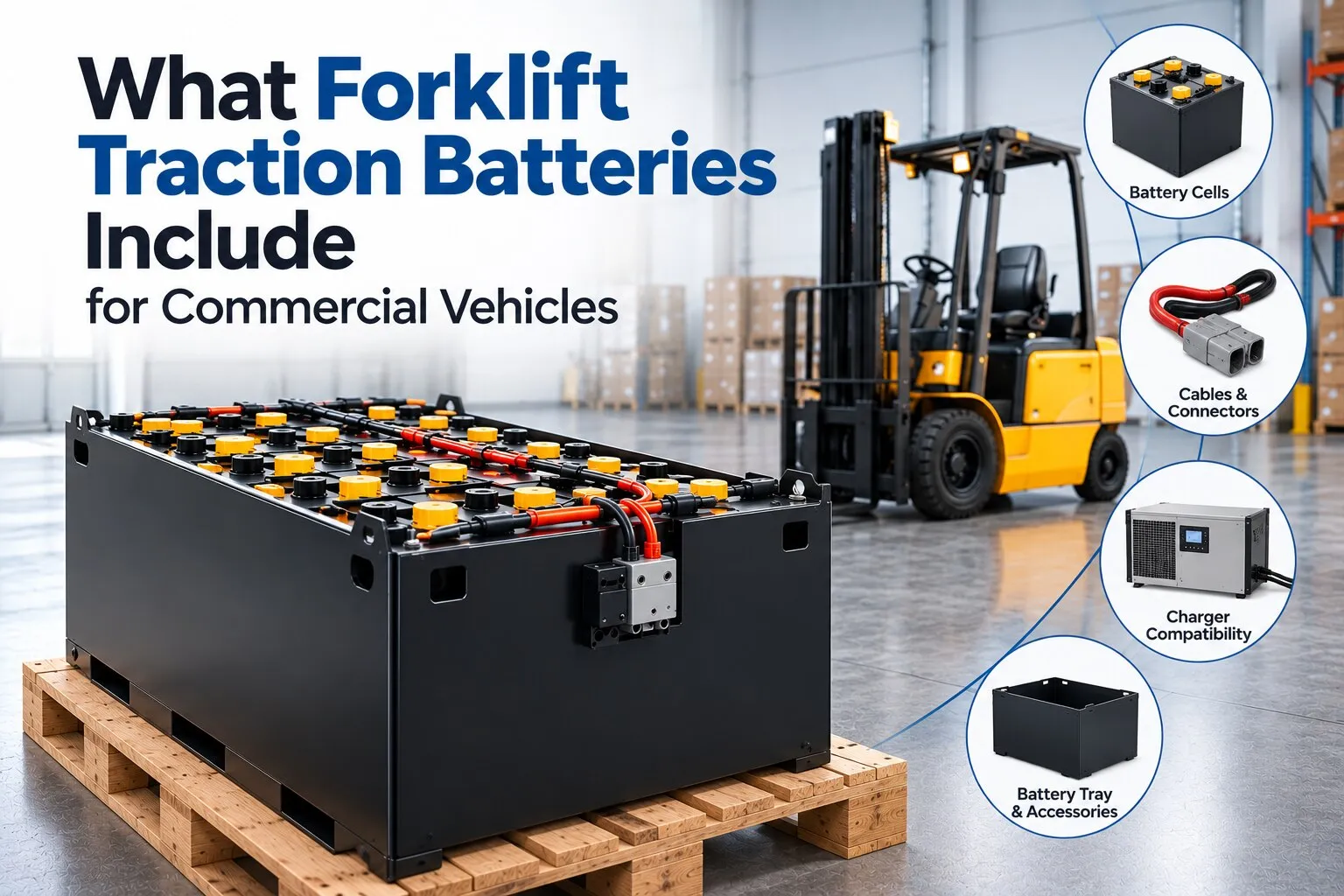
A proper quote covers more than cells: it identifies the steel tray, intercell connectors, terminal hardware, cables, battery identification plate, electrolyte, and warranty documents. It also states whether delivery includes unloading, fitting, removal of the old battery, commissioning, testing, and operator handover. If the price covers cells only, label it that way.
Ask for these forklift battery purchase inclusions in writing:
- Delivery condition: filled and charged, dry-charged, or electrolyte supplied separately. This determines transport classification, commissioning work, storage limits, and when warranty or service-life conditions begin.
- Capacity basis: state the C5 rating, end voltage, test temperature, and applicable standard. A C8 or C20 figure is not directly comparable with C5.
- Flooded-battery support: include the designated charging procedure, cooling interval, electrolyte checks, and distilled or deionized water plan.
- Single-point watering, if required: specify the manifold, float valves, fill coupling, water-level indicator, external supply, filtration or deionization equipment, and commissioning.
- Lithium integration: identify the charger, CAN interface, mounting hardware, thermal management, and software configuration rather than assuming they are included.
| Battery package | Traction battery supply details to confirm | Omission consequence |
|---|---|---|
| Flooded lead-acid | Cells, tray, electrolyte, connectors, cables, watering plan, delivery, fitting, and testing | Extra commissioning and maintenance costs |
| Lithium-ion | Battery-management system, cell monitoring, contactors, fuses, service disconnect, communications, charger, and commissioning | The pack may not communicate or charge |
| Any chemistry | Warranty, identification plate, acceptance test, operator handover, and old-battery removal | Disputes over readiness and disposal |
How to match the battery to the commercial vehicle
A battery fits only when its data matches the forklift’s data plate and battery-compartment drawing. Do not compare forklift traction batteries for commercial vehicles by ampere-hours alone.
| Specification | Verify against the vehicle | What failure looks like |
|---|---|---|
| Electrical | 24, 36, 48, 72 or 80 V nominal voltage; Ah capacity at the stated discharge rate; connector, polarity and terminal position | Wrong voltage damages controls; inadequate capacity shortens the shift |
| Physical | Length, width, height, tray entry, lifting points, rollers and side-extraction clearance | The pack cannot enter, lock, lift or be removed safely |
| Weight | Battery mass within the manufacturer’s minimum and maximum range | A light replacement can reduce counterweight, stability and residual capacity |
Request a nameplate or datasheet showing cell count, total voltage, Ah rating, test discharge rate, dimensions, mass and connector part number. Confirm that the tray—not just the cell assembly—matches the truck. A 48 V pack with the correct capacity remains unusable if its roller spacing or extraction side is wrong.
For lithium commercial vehicle traction batteries, verify the battery-management system, cell-temperature and voltage monitoring, contactors, fuses, service disconnect and vehicle communication interface. Confirm compatibility with the charger and CAN system, plus mounting hardware and thermal-management requirements. A replacement that powers up but cannot exchange charging or fault data is not a safe match.
Before ordering, obtain written confirmation of the forklift manufacturer’s battery-weight range, connector and polarity, and the approved charging protocol. That record prevents a physically compatible battery from becoming an unstable or electrically incompatible installation.
How chemistry and charging needs change the package
Nominal voltage does not make commercial fleet battery options interchangeable. Compare the chemistry against shift length, charging windows, workplace controls, and total installed cost—not the pack price alone.
| Option | Charging and controls | Best fit and trade-off |
|---|---|---|
| Flooded lead-acid | Charge in a designated, ventilated area because hydrogen can accumulate. Provide ignition control, eye and body protection, spill response, emergency washing, cooling time, electrolyte checks, and deionized or distilled water after charging. | Proven for planned shifts and battery changes. It adds watering labor, ventilation, and downtime, but tolerates demanding forklift work well. |
| Gel or VRLA | Use the specified voltage, current, and charge profile; a standard flooded-battery charger can damage AGM or gel cells. Sealed construction removes routine watering, but heat, overcharging, and unsuitable opportunity charging shorten life. | Useful where maintenance access or spill control is difficult. Confirm whether the design is AGM, gel, or TPPL because charging limits and cycle performance differ. |
| Lithium-ion | Use the battery maker’s charger and communication settings. Confirm the battery-management system, temperature monitoring, contactors, fuses, service disconnect, thermal-event procedure, isolation rule, and damaged-battery quarantine process. | Suits multi-shift fleets using planned opportunity charging. It reduces watering and routine gas emissions, but requires compatible integration and disciplined thermal safety. |
Price the complete operating system: chargers, spare batteries, battery-changing equipment, electrical or ventilation upgrades, telemetry, maintenance, end-of-life handling, and charging or changeover downtime. A lithium pack can win on labor and availability; flooded lead-acid can win where charging infrastructure and scheduled changes already exist.
How to compare the quoted price and supply terms
Compare the installed total, not the battery pack price. For one forklift, include fitting, testing, charger compatibility, delivery, removal of the old unit and downtime; for a multi-shift fleet, add spare batteries, charging capacity and changeover equipment.
| Cost item | Single vehicle | Multi-shift fleet |
|---|---|---|
| Battery package | Cells, tray, connectors, cables and terminal hardware | Matching packs, spare units and identification plates |
| Charging | Compatible charger, delivery and electrical work | Extra chargers, cabling, ventilation and charging-room upgrades |
| Handling | Removal, fitting and commissioning | Battery changer, lifting gear and operator training |
| Support | Warranty and scheduled maintenance | Watering labour, telemetry, service contract and response times |
| Lifecycle | Old-battery transport and recycling | Fleet-wide end-of-life handling and planned replacement |
| Lost operation | Charging and installation hours | Charging, changeover and failure downtime across shifts |
Ask for these traction battery supply details in writing:
- State whether a lead-acid battery arrives filled and charged, dry-charged, or with electrolyte supplied separately. That choice changes transport classification, storage limits, commissioning work and the date used for warranty or service-life measurement.
- For lithium, confirm whether the quote includes the battery-management system, charger, CAN integration, mounting hardware, thermal management and software commissioning.
- Record delivery date, delivery location, unloading responsibility, warranty start date, lead time for replacements and remedies for late supply.
The lowest quote can become the costliest commercial fleet battery option when operators wait for charging or a replacement. GLOBAL POWER TECHNOLOGIES can help buyers turn these forklift battery purchase inclusions into a line-by-line comparison rather than accepting a cell-only price.
Related products
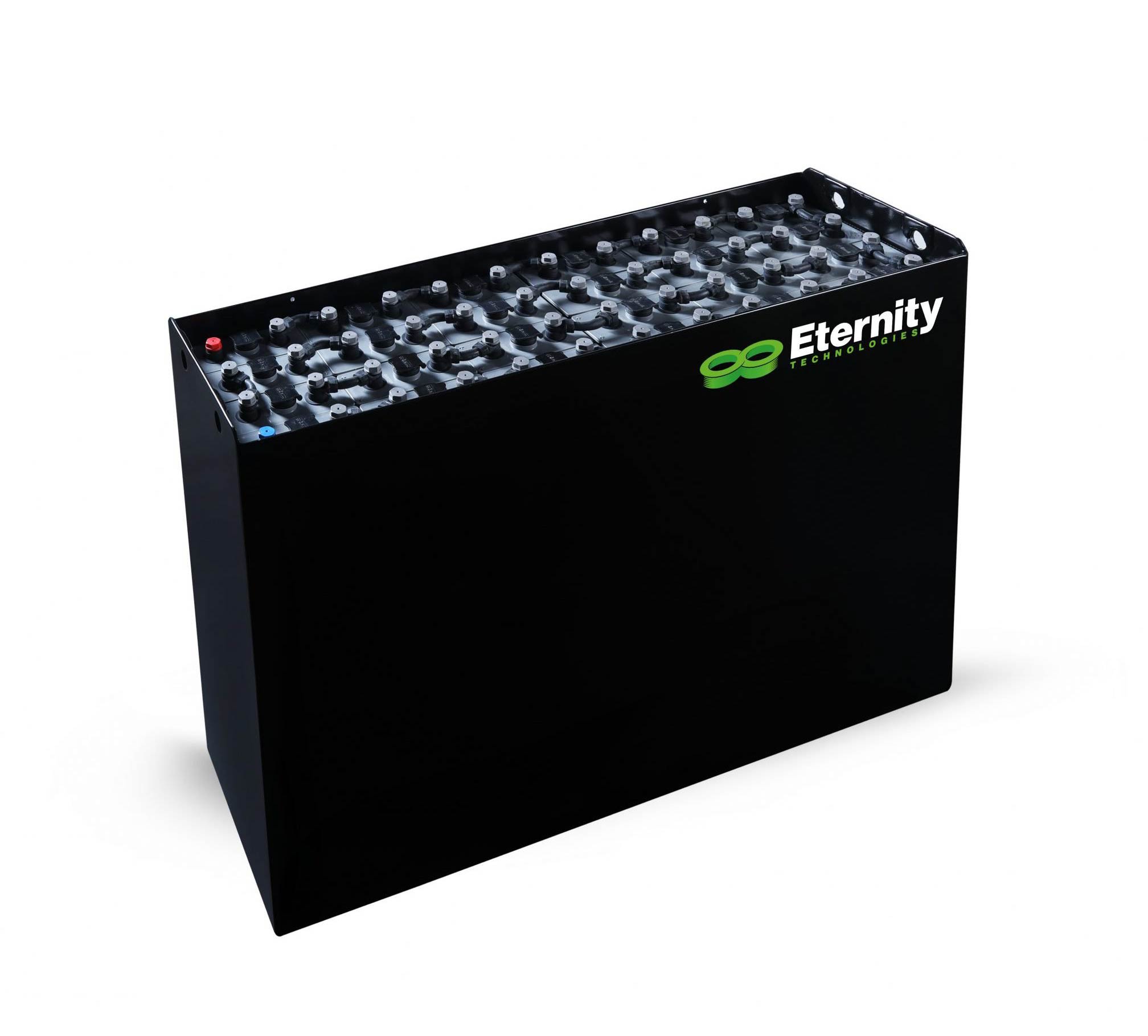 | Forklift Traction batteries A traction battery is a large rechargeable power source built to drive electric vehicles, industrial forklifts, material-handling machines, and... View product → |
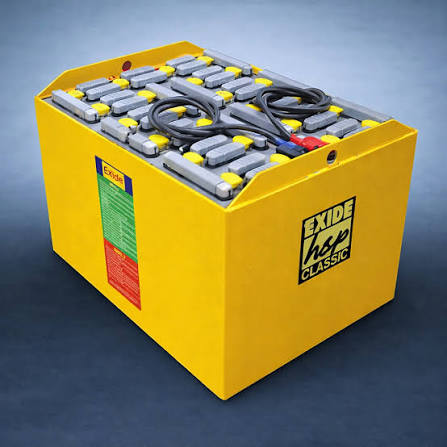 | Exide Forklift Traction battery Exide Forklift Traction battery xide forklift traction batteries provide heavy-duty power for electric material handling equipment like forklifts, stackers, reach trucks, and pallet... View product → |
What must happen before the battery enters service
Before release to work, inspect the installed pack against the truck data plate and purchase order; forklift traction batteries for commercial vehicles are not interchangeable car or UPS batteries. Confirm nominal voltage, Ah rating and discharge basis, tray dimensions, minimum mass, lifting points, extraction path, connector, polarity and terminal position.
Use this acceptance table:
| Check | Pass condition | Reject or correct |
|---|---|---|
| Identity | Serial, voltage, Ah, chemistry and delivery state match the order | Missing plate, wrong chemistry, or different dry/filled state |
| Installation | Tray is secured; restraint, cables, connector, clearances and lifting points fit the truck | Movement, rubbing cable, wrong connector, or mass outside the truck range |
| Electrical | Polarity and open-circuit voltage are correct; charger and BMS communicate; disconnect and protective devices operate | Reverse polarity, fault code, failed interlock, or charger mismatch |
| Condition | No cracked case, leak, damaged terminal, loose connection or shipping damage | Quarantine the battery and photograph the defect |
Commissioning must match chemistry. For flooded lead-acid, document electrolyte condition, charge the pack, provide a designated ventilated charging area, and verify watering instructions, cooling time and deionized-water supply. For lithium commercial vehicle traction batteries, test the BMS, contactors, fuses, temperature sensors, CAN interface, charger profile and software settings.
Run a controlled functional test with the truck, recording voltage, fault codes, charge start and stop, and emergency isolation. Handover must include the test record, warranty start condition, operating limits, charging procedure, inspection schedule, acid-resistant PPE requirements, emergency contacts and operator sign-off.
Frequently asked questions
What should a forklift battery purchase include?
A complete quote identifies the cells, steel tray, intercell connectors, terminal hardware, cables, battery identification plate, electrolyte, warranty documents, and included services such as delivery, fitting, old-battery removal, commissioning, testing, and operator handover.
How do you match a traction battery to a commercial vehicle?
Check the vehicle manufacturer's required voltage, ampere-hour capacity, battery dimensions, connector, polarity, weight range, and compartment dimensions against the battery specification.
How do battery chemistry and charging needs affect the package?
Chemistry changes the charger, ventilation, watering or maintenance requirements, charge duration, operating procedure, and safety controls. Confirm compatibility between the battery, charger, vehicle, and site.
How should you compare commercial vehicle traction battery quotes?
Separate the battery hardware price from delivery, unloading, fitting, old-battery removal, commissioning, testing, taxes, lead time, warranty coverage, and exclusions. Confirm whether the quote covers cells only or a ready-to-use battery.
Related products
 | forklift battery Amaron Brute is the latest product from the Amara Raja Energy & Mobility Limited. View product → |
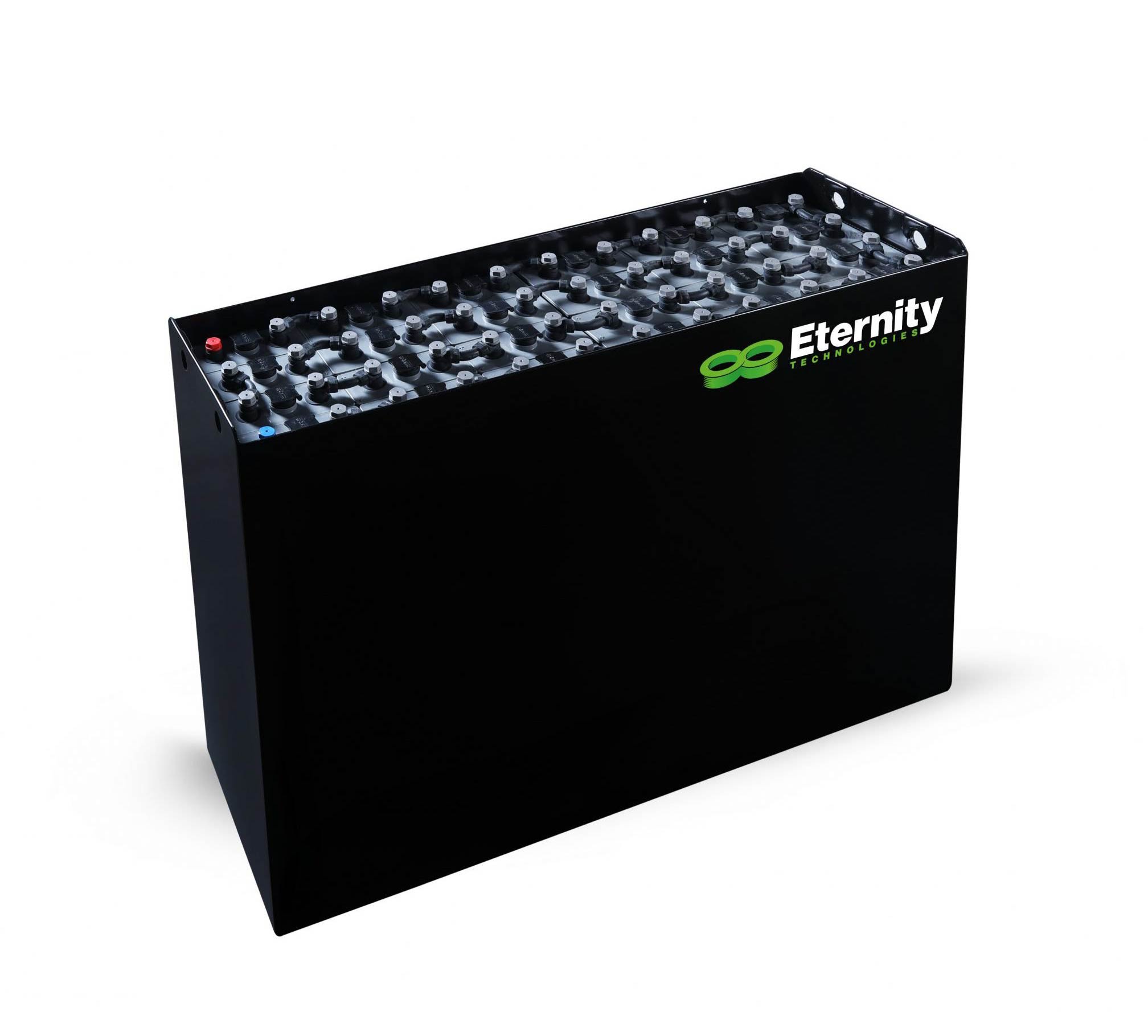 | Eternity Traction batteries Eternity traction batteries are premium, high-performance industrial power cells built for heavy-duty material handling machinery like electric... View product → |
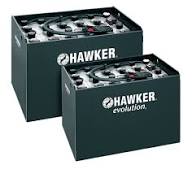 | Hawker Traction batteries manufactured by EnerSys, are premium, high-capacity industrial power cells engineered for demanding material handling equipment. View product → |
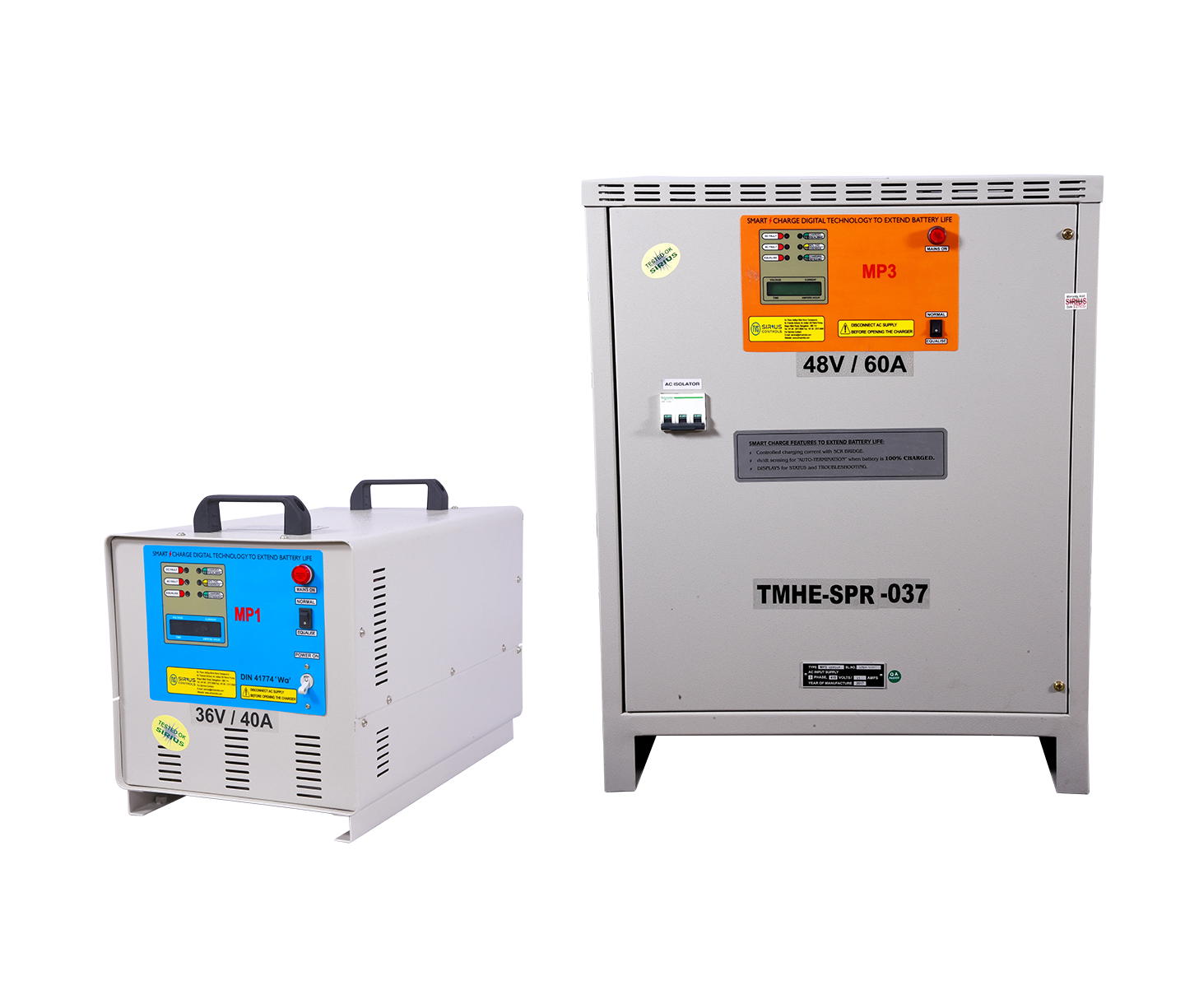 | chargers Forklift & Traction Battery Charger Battery Chargers for every battery Our chargers are designed for use with Lead Acid batteries and Lithium batteries. View product → |
Keywords